Cast iron boilers can run for 30 years or more, so age alone does not decide whether to repair or replace. These are the questions we walk through with homeowners.
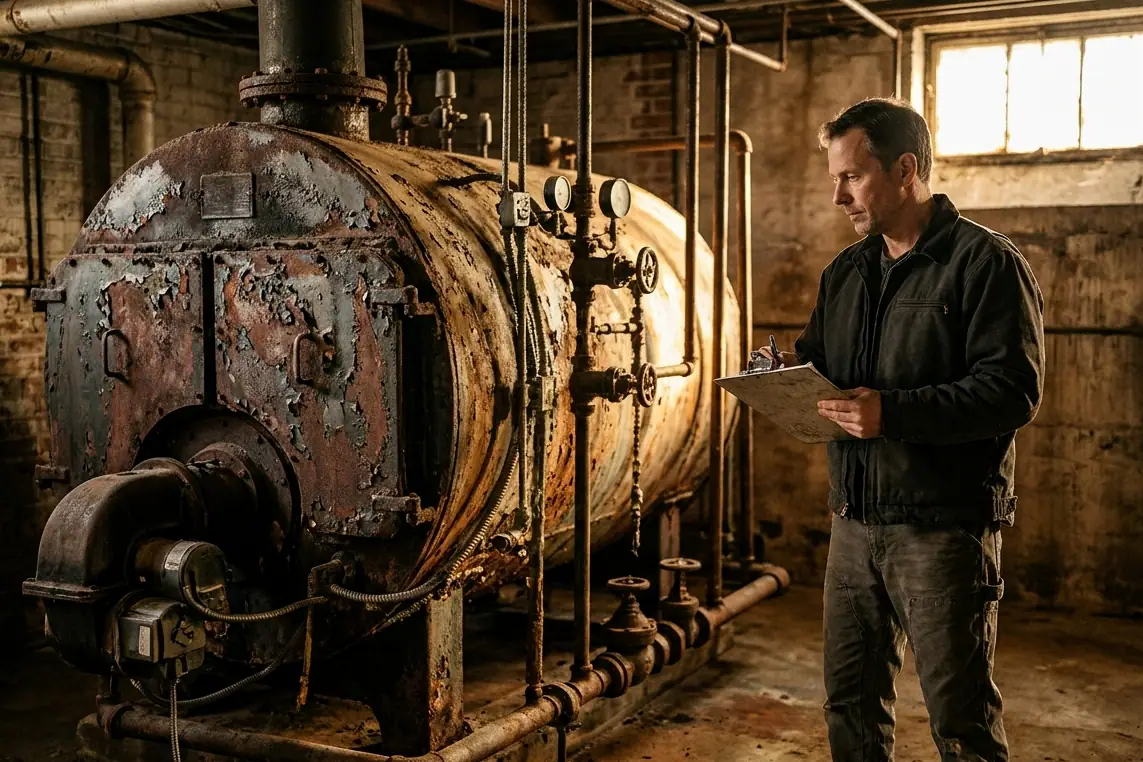
Is the heat exchanger sound?
Cracked cast iron sections or a leaking heat exchanger are the clearest sign it is time. Water seeping from between sections, rust streaks down the jacket or water in the combustion chamber all point that way. Everything else on a boiler, from pumps to controls, can be replaced.
How often is it failing?
One repair every few years on an older boiler is normal. A repair every season, or several in one winter, suggests the whole unit is wearing out at once.
Is it safe?
Venting problems, high carbon monoxide readings at the flue or a chimney that is deteriorating can push the decision toward replacement, especially if fixing the venting would cost a large share of a new system.
What would a new boiler save?
Older boilers often run at noticeably lower efficiency than modern condensing units. Whether the savings are worth it depends on your fuel use, your radiators and the water temperature the house needs on cold days.
A simple rule of thumb
- Repair if the boiler is sound, safe and the repair is modest.
- Plan for replacement if the boiler is past 25 years and needs a major part.
- Replace promptly if the heat exchanger is leaking or the venting is unsafe.
Planning ahead is always better than replacing in a January emergency, when choices are limited and the house is cold. A condition report in the fall gives you time to choose.
Call (401) 598-2964, answered 24/7. Tell us what you are seeing and we will help you decide whether it needs a visit.