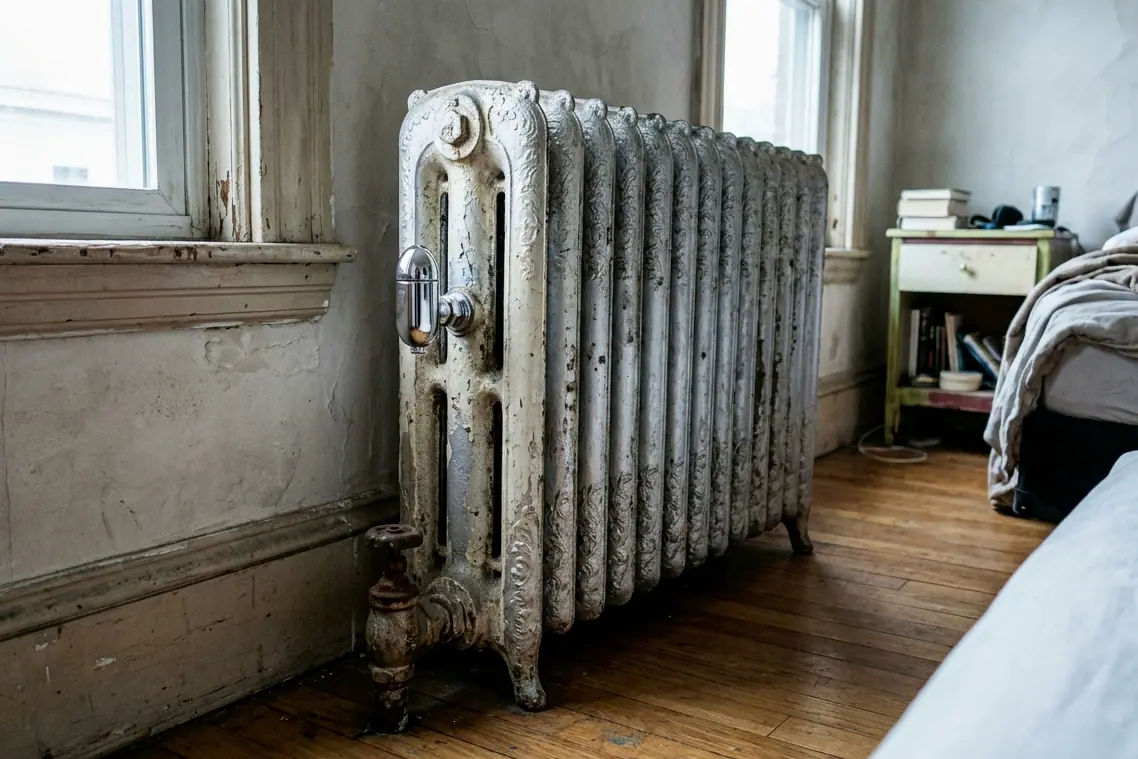
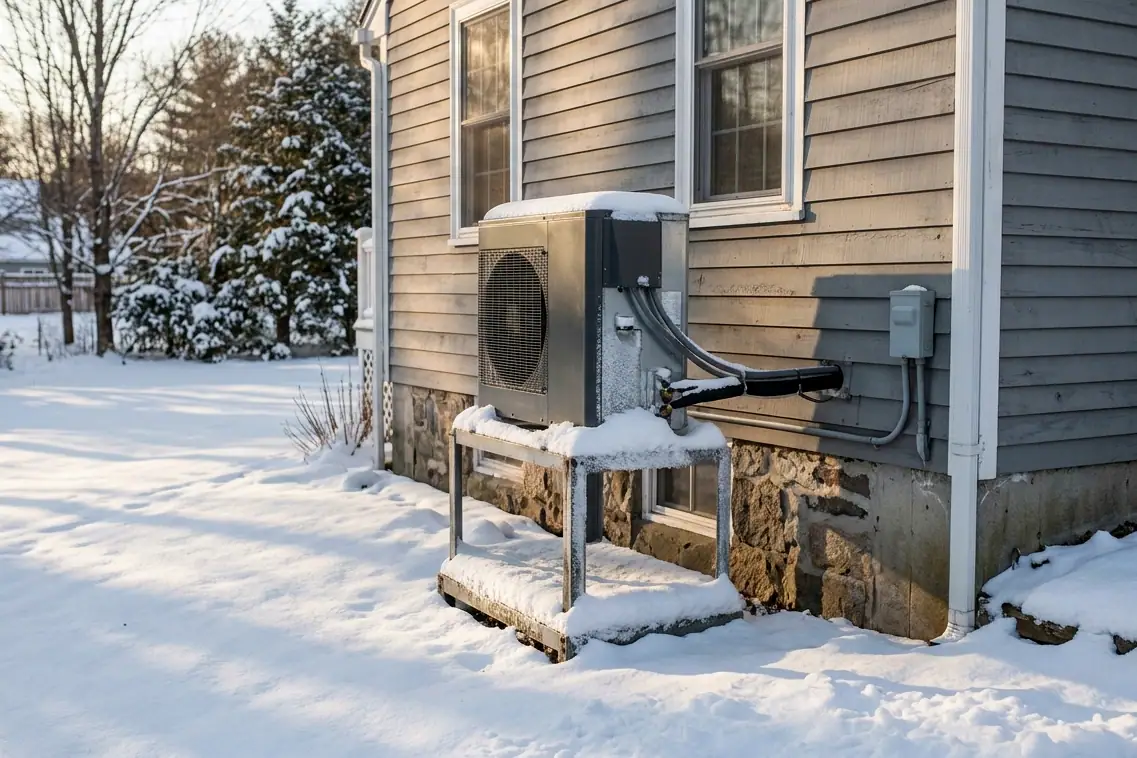
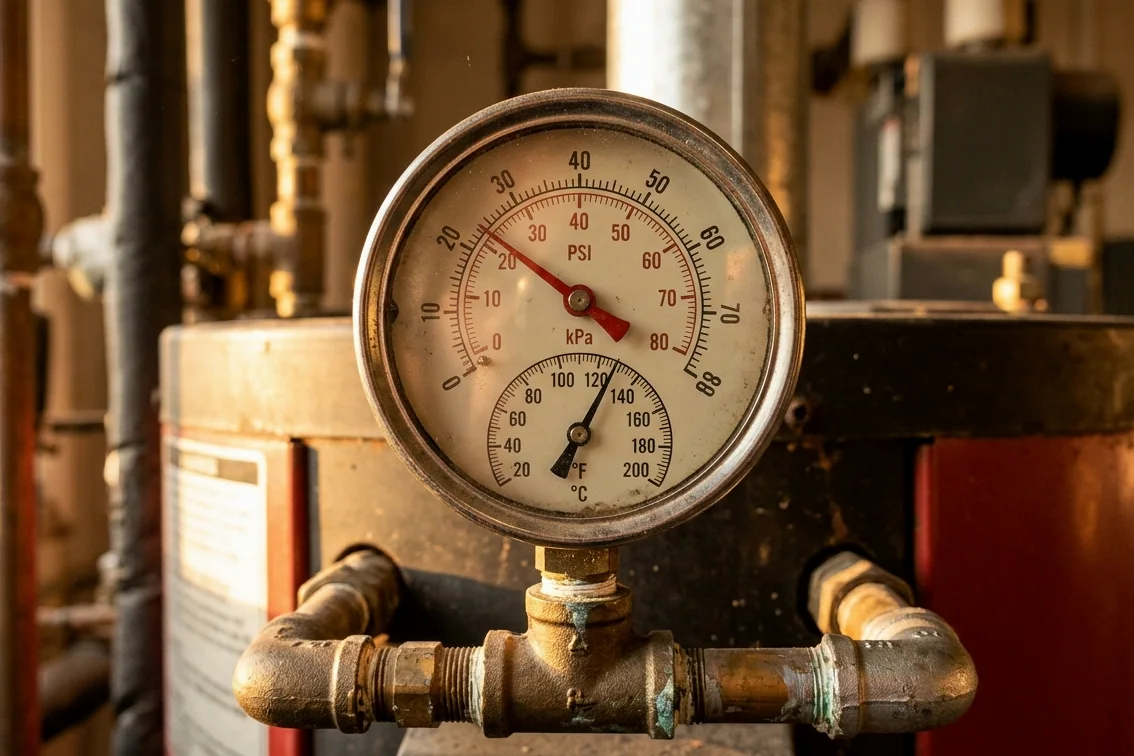
Most hot-water boilers have a round gauge on the front or on the piping that shows two things at once: pressure in psi and water temperature in degrees. It is the quickest health check you can do, and it takes ten seconds.
What normal looks like
With the boiler cold, pressure in a typical two- or three-story house usually sits between 12 and 15 psi. As the water heats and expands, the reading rises a few pounds, often to 18 or 20 psi. Temperature while running depends on the system: older cast iron radiators often run at 160 to 180 degrees, while modern condensing boilers may run much cooler on mild days.
Pressure too low
If the needle drops below about 10 psi, the top floor radiators may start running cold because water cannot reach them properly. Low pressure usually means water is leaving the system somewhere, through a slow leak at a valve, a dripping relief valve or a fitting under a radiator. An automatic fill valve normally tops the system up, so a steady drop can also mean that valve has failed or been closed.
Pressure too high
If pressure climbs toward 30 psi, the relief valve will open to protect the boiler, and you will see water on the floor. The two common causes are a waterlogged expansion tank that no longer absorbs the water's expansion, and a fill valve that leaks city water into the system. Both are routine repairs.
When to call
- Pressure keeps dropping and the boiler needs refilling every few days.
- The relief valve drips or discharges water.
- Pressure swings widely between cold and hot.
- Upper-floor radiators stay cold while the boiler reads hot.
Do not cap a dripping relief valve; it is a safety device doing its job. And if you ever see the pressure near 30 psi, turn the boiler off and call. Keeping an eye on the gauge once a week in winter is one of the simplest ways to catch a small problem before it turns into a no-heat call.
Call (401) 598-2964, answered 24/7. Tell us what you are seeing and we will help you decide whether it needs a visit.