The short answer is yes. The longer answer depends on the heat pump you buy, how it is sized and how well the house holds heat.
Older heat pumps earned a bad reputation
Heat pumps installed a couple of decades ago lost much of their output as temperatures dropped toward freezing and leaned on electric strip heat the rest of the time. That made them expensive and uncomfortable in New England, and the reputation stuck.
What changed
Cold-climate models use variable-speed compressors and refrigerant circuits designed for low outdoor temperatures. Many keep producing useful heat well below zero degrees Fahrenheit. Providence's winter design temperature sits in the single digits, which is within the range these systems are built for.
Sizing is everything
A heat pump sized by square footage or by the old boiler's label often ends up too big or too small. We size from a heat-loss calculation for your actual house, including insulation, windows and air leakage. That tells us how much heat the house needs on the coldest design day and how much the heat pump can deliver at that temperature.
The role of backup heat
Many Rhode Island homes keep an existing boiler or furnace as backup, or add electric backup. The heat pump carries the load for most of the season, and backup only runs during deep cold. Good thermostat settings make sure backup does not kick on when it is not needed.
Practical details that matter here
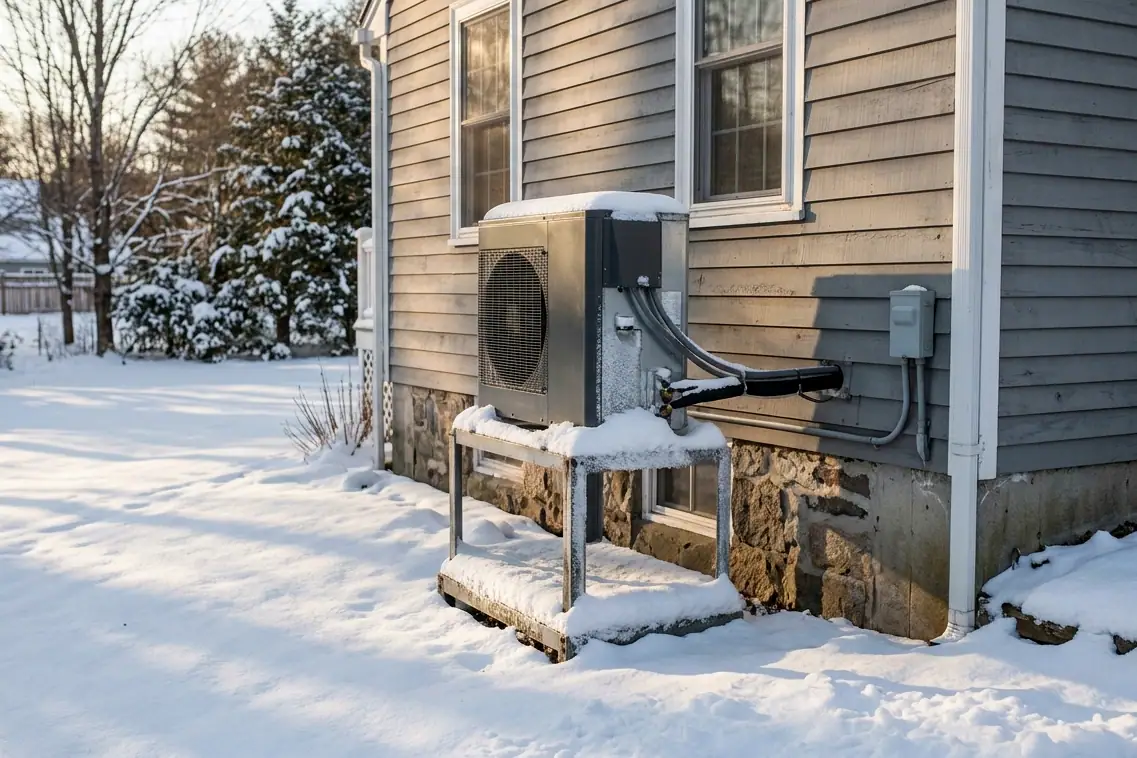
- Mount the outdoor unit above typical snow depth on a stand or bracket.
- Keep it out from under roof drip lines that can drop ice on it.
- Give defrost water a place to drain so it does not freeze into a mound.
- Clear snow from around the unit after big storms.
Set up this way, a heat pump can heat most Rhode Island homes comfortably through the winter and cool them through the summer, from one system.
Call (401) 598-2964, answered 24/7. Tell us what you are seeing and we will help you decide whether it needs a visit.