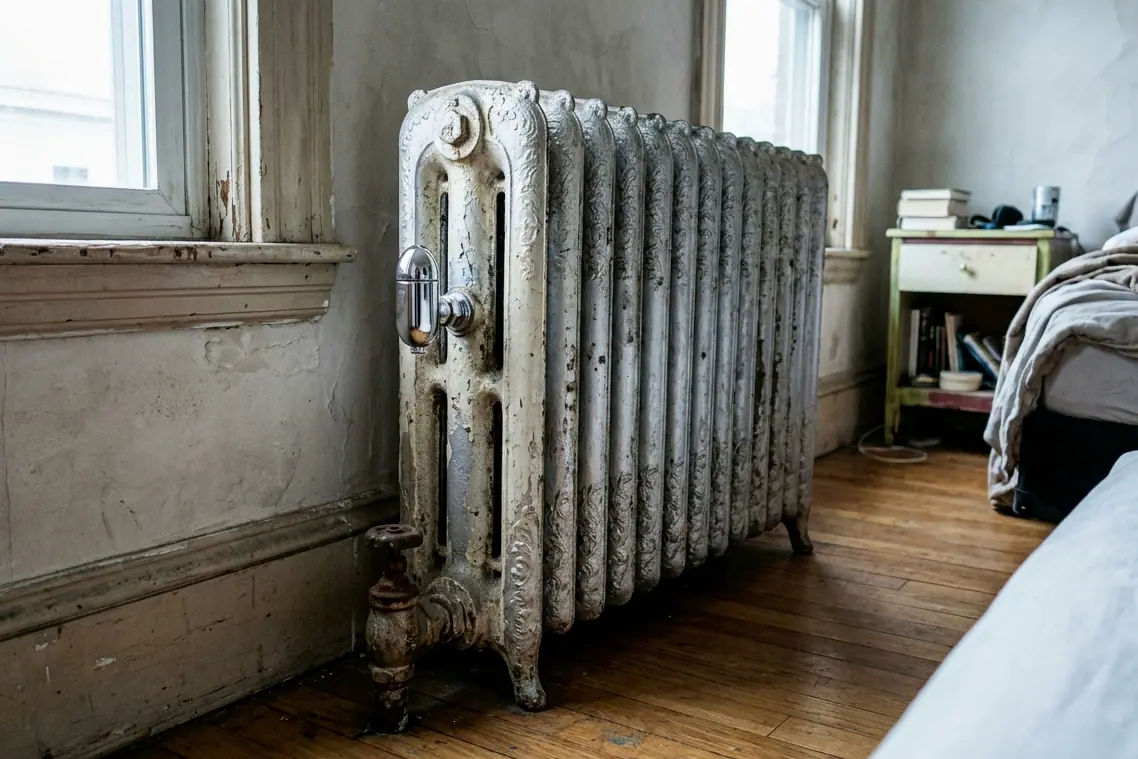
Many homes on the East Side, in Elmwood and across older neighborhoods heat with radiators and were never built with ductwork. Window units work, but they are noisy, block light and often are not allowed in condos. There are two good ways to get real central cooling without gutting the house.

Option one: small-duct high-velocity
These systems use flexible tubing about two inches across, run through closets, attics and wall cavities with only small openings. Each room gets one or more small round outlets, which are far less visible than standard registers. The air handler usually sits in the attic, and the outdoor unit can be a standard condenser or a heat pump.
High-velocity systems are good at removing humidity and keep historic plaster and trim mostly untouched. They need careful design, enough outlets per room and proper sound attenuation to stay quiet.
Option two: ductless mini-splits
Mini-splits put an indoor unit on the wall, ceiling or floor of each zone, connected to an outdoor unit by a small refrigerant line. There are no ducts at all. They heat as well as cool, which is a big advantage in Rhode Island. The trade-off is that the indoor units are visible on the wall.
How to choose
- If you want nothing on the walls and have attic space, small-duct is often the better fit.
- If you want heating and cooling and the fastest install, ductless often wins.
- If the attic is finished or very tight, ductless may be the only practical route.
- Many homes mix the two: small-duct for bedrooms and ductless for a living space.
Either way, start with a cooling-load calculation. It tells you how much capacity each room needs, which decides how many outlets or heads the house really needs.
Call (401) 598-2964, answered 24/7. Tell us what you are seeing and we will help you decide whether it needs a visit.